


January 22, 2026
Why measuring eye growth matters in childhood myopia
Why measuring eye growth—not just prescriptions—matters for managing childhood myopia. Learn how axial length guides care at Merivale Vision Care (Ottawa, Ontario).
Why measuring eye growth—not just prescriptions—matters for managing childhood myopia. Learn how axial length guides care at Merivale Vision Care (Ottawa, Ontario).
If your child’s glasses prescription keeps changing every year, you’re not alone. Many parents assume that stronger glasses are just part of growing up. But prescriptions only tell part of the story.
What actually matters most is how long the eye is growing.
That measurement is called axial length, and it has become one of the most important tools in modern myopia management.
At Merivale Vision Care, we use axial length measurement to better understand myopia progression, guide treatment decisions, and help families make informed choices—especially during the years when eye growth is most active.
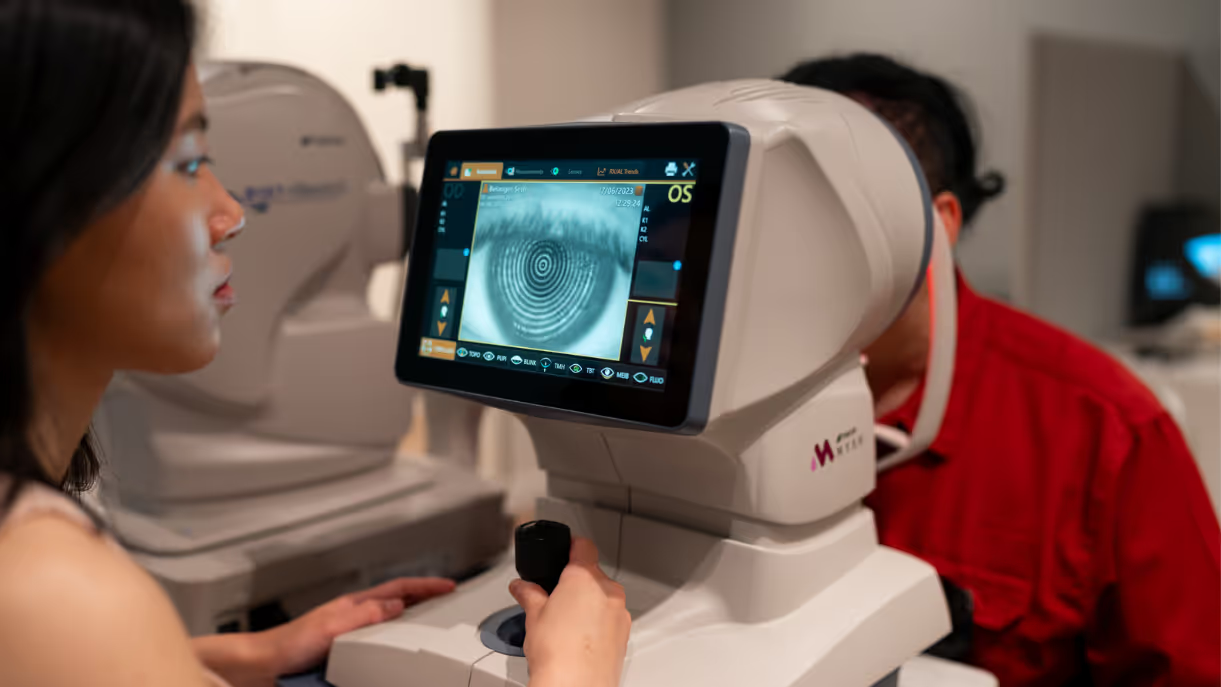
Axial length is the front-to-back length of the eye, measured in millimetres.
Axial length tells us whether myopia is stable or still progressing—even when vision seems “okay.”
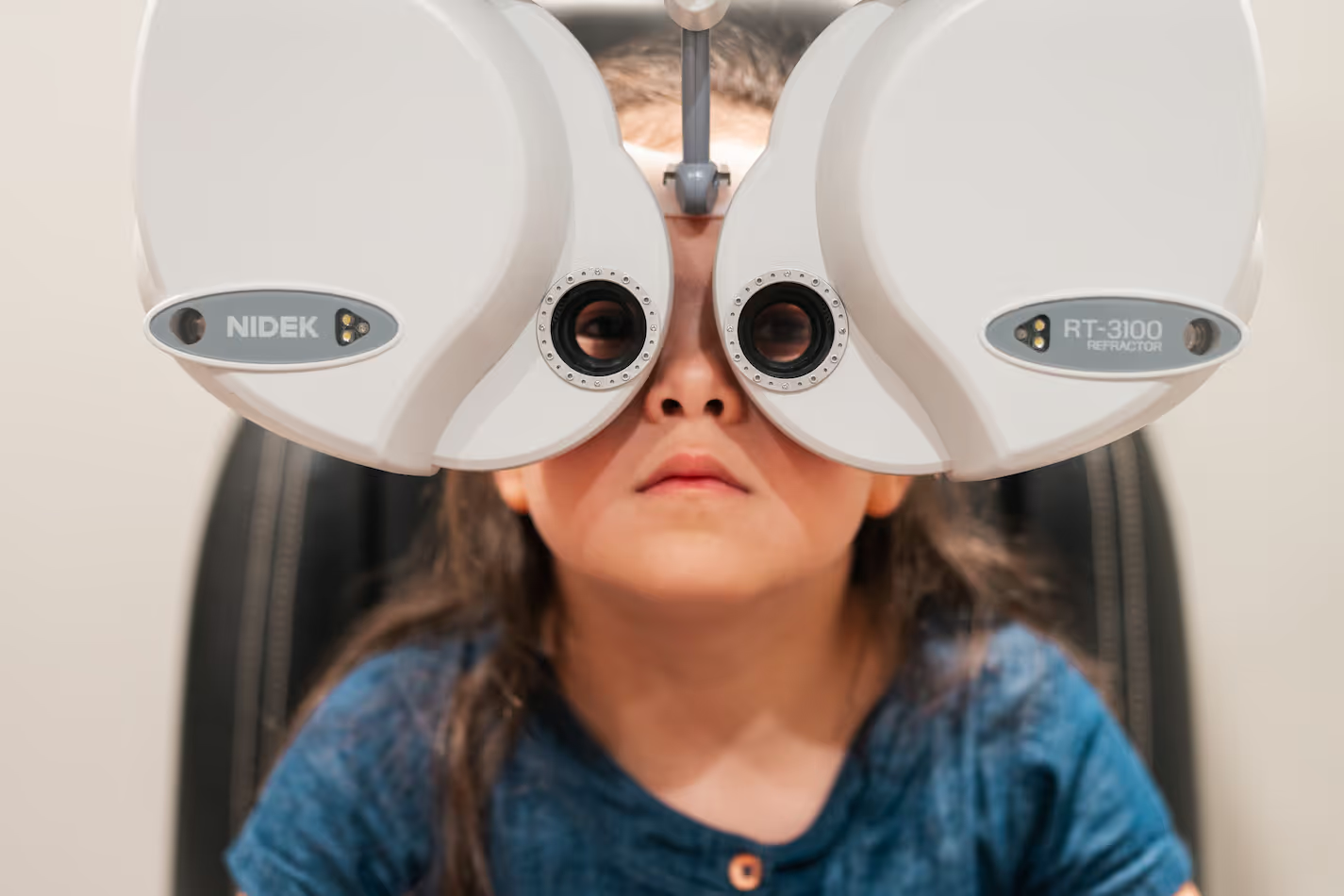
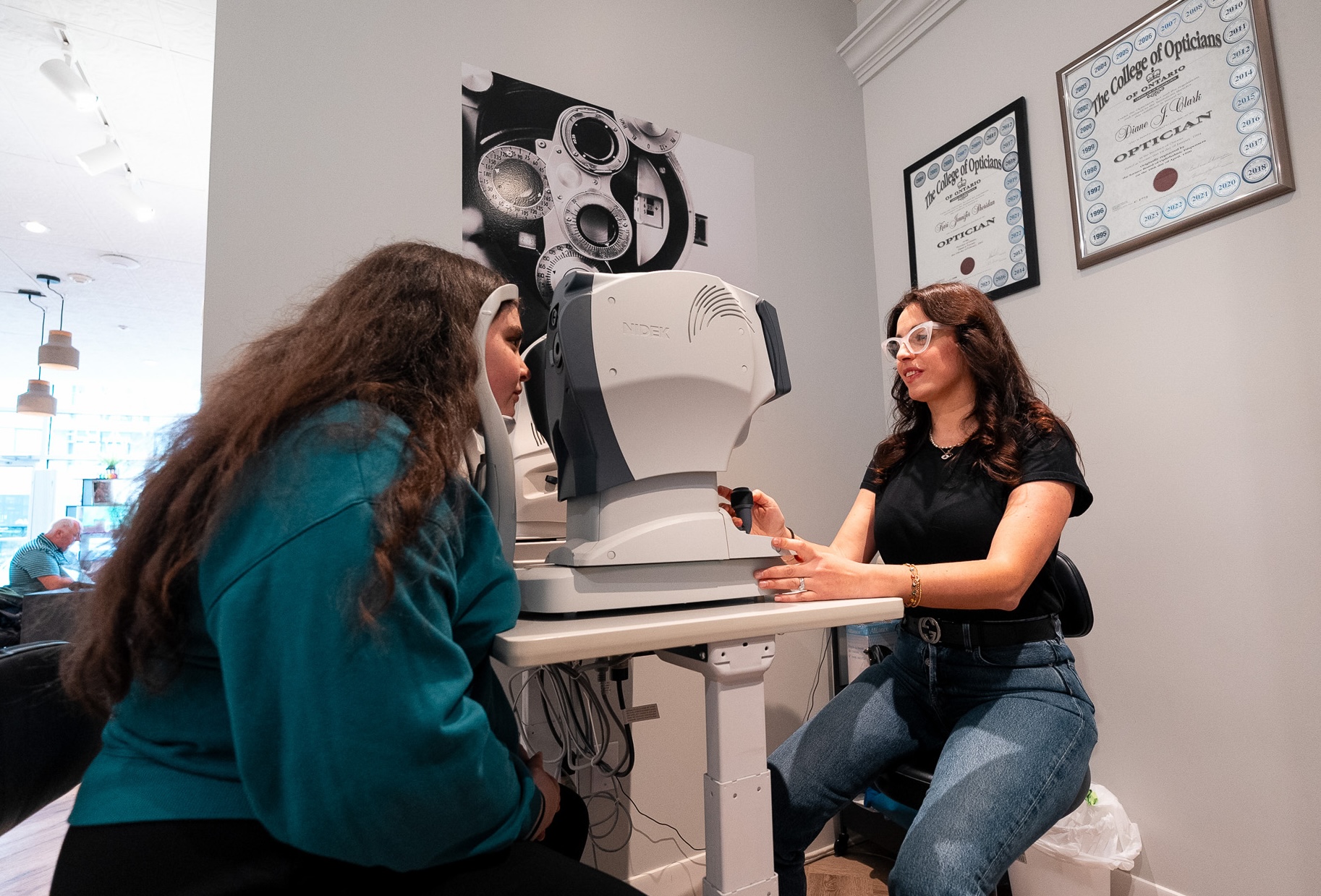
This measurement is painless, quick, and non-contact. Most kids find it easier than reading letters on the chart.
A prescription measures how clearly your child sees today.
Axial length tells us what’s happening structurally inside the eye.
Here’s why that matters:
That’s why global myopia guidelines recommend tracking axial length—not just refraction.
“Axial length is one of the most reliable ways to monitor myopia progression over time.”
— International Myopia Institute [IMI]
Myopia isn’t just about needing glasses.
As axial length increases, the lifetime risk of eye disease also rises, including:
Slowing eye growth during childhood and teenage years can reduce future risk, even if your child still needs glasses.
That’s why modern myopia care focuses on monitoring growth trends, not just vision clarity
At Merivale Vision Care, axial length measurement is part of a thoughtful, data-guided approach to myopia management.
We use it to:
This helps avoid guesswork.
Families can see real numbers, real trends, and real reasons behind care decisions.
Most children in myopia management are monitored every 3–6 months, depending on age and growth rate.
This cadence is supported by international consensus guidelines [IMI].
“Regular axial length monitoring allows earlier detection of accelerated eye growth.”
— Myopia Profile
“Seeing growth patterns helps us fine-tune treatment instead of reacting late.”
— Spadina Optometry, Toronto
A typical myopia follow-up visit may include:
If growth is faster than expected, we talk through options calmly and clearly—no pressure, no one-size-fits-all recommendations.
“Axial length helps us decide when to intervene and when to simply monitor.”
— Insight Eye Care, Waterloo
No. It’s non-contact and takes just seconds.
No. They measure different things and work best together.
Growth depends on age, genetics, and individual patterns. That’s why tracking trends over time matters more than one number.
No test stops myopia. Monitoring helps guide strategies that may slow progression.
Yes. The International Myopia Institute and other optometry bodies emphasize axial length as a key endpoint in myopia management [IMI].
More parents are learning that myopia care has changed.
Instead of waiting for prescriptions to worsen, families want:
Axial length measurement provides exactly that.
“Parents appreciate having something measurable to follow—not just ‘wait and see.’”
— Waverley Eye Care, Winnipeg
Ottawa — Merivale Vision Care
Toronto — Spadina Optometry
Waterloo — Insight Eye Care
Toronto — Bay Street Eye Care
Winnipeg — Eyes on Bridgwater
Calgary — Mission Eye Care
Winnipeg — Waverley Eye Care
Vancouver— Eye Lab
If your child’s prescription is changing—or you simply want better insight into their eye growth—we’re happy to talk.
You don’t need to decide everything at once.
Sometimes the first step is just measuring and understanding what’s happening.
Book a myopia consultation or learn more at Merivale Vision Care.
This article is for educational purposes only and does not replace individualized medical advice. Myopia management recommendations vary by patient. Please consult your optometrist for personalized care.
.avif)