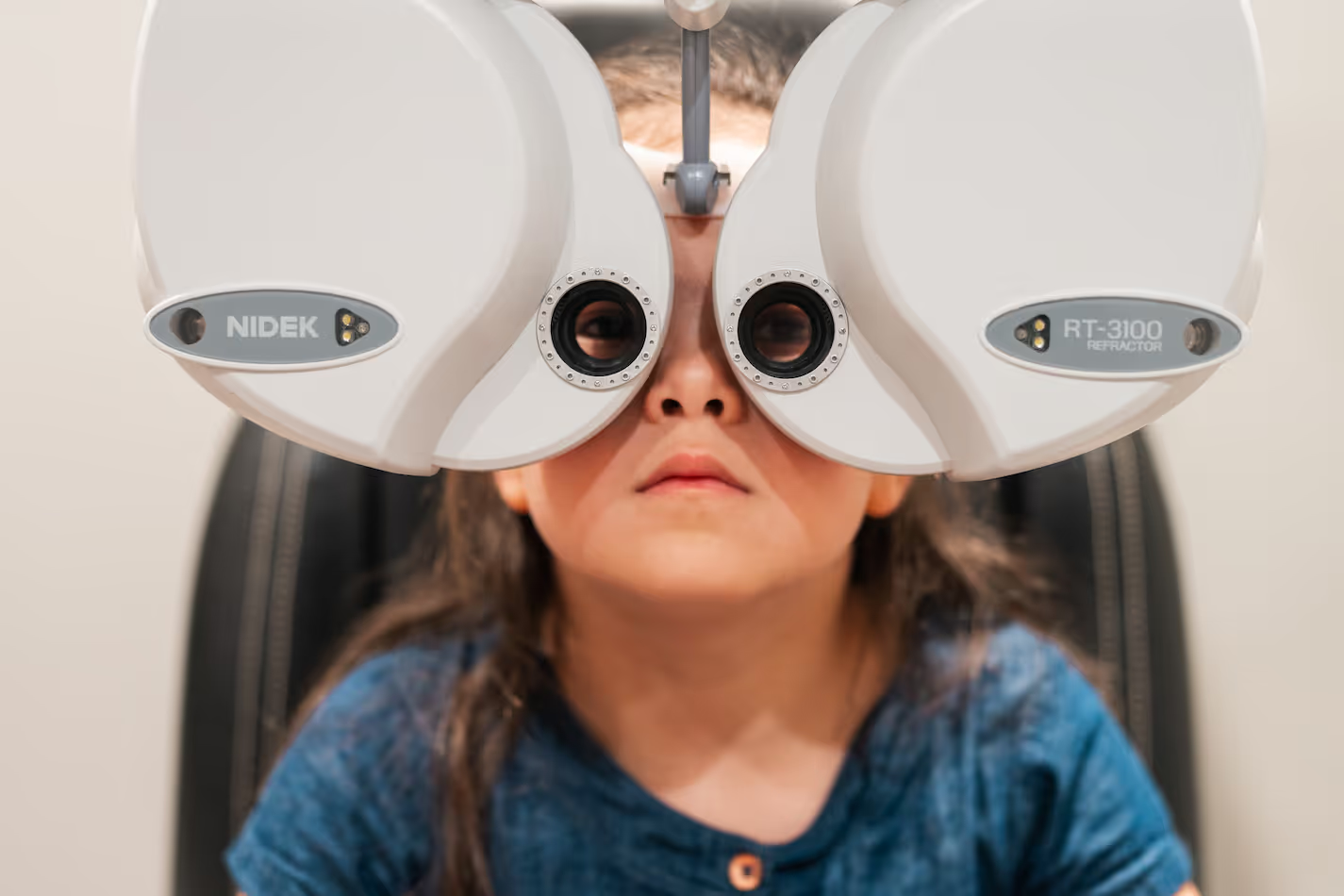
Blue light glasses can help reduce eye strain and improve sleep quality for heavy screen users, but they don't prevent permanent eye damage. The science shows mixed results—and there are often better solutions for digital eye strain. Here's what optometrists actually recommend, and what works better than blue light filters alone.
If you've ever finished a workday with tired, burning eyes or found yourself scrolling your phone late at night and struggling to fall asleep, you've probably wondered whether blue light glasses might help. They're everywhere—advertised on social media, sold at pharmacies, recommended by coworkers. But do they actually work?
The short answer: sometimes, but not in the way most people think.
At Merivale Vision Care in Ottawa, our optometrists get asked about blue light glasses almost daily. Parents want to know if their kids need them for schoolwork. Remote workers wonder if they'll solve their eye strain. Late-night scrollers ask if they'll help them sleep better.
Here's what the science actually shows—and what solutions work better for most people.
What Blue Light Actually Does to Your Eyes
Blue light is part of the visible light spectrum with a shorter wavelength and higher energy. You're exposed to it from digital screens, LED lighting, and most importantly—the sun (your biggest source of blue light).
During the day, blue light helps regulate your circadian rhythm. It tells your brain "it's daytime" and keeps you alert.
At night, blue light from screens can suppress melatonin production, making it harder to fall asleep. This is where most of the concern comes from.
For your retina, there's been concern about whether long-term blue light exposure might contribute to macular degeneration. However, current research shows that the amount of blue light from screens is far lower than what you get from being outdoors—and there's no conclusive evidence that screen-based blue light causes permanent eye damage.
The takeaway: Blue light affects your sleep cycle and can contribute to eye discomfort, but it's not damaging your retinas.
The Evidence: Do Blue Light Glasses Work?
Let's look at what the research actually shows.
What Blue Light Glasses May Help With:
Sleep quality for evening screen users
Studies show that blocking blue light in the evening (1-2 hours before bed) can help some people fall asleep faster. If you scroll social media or watch TV late at night, blue light glasses might help you wind down more effectively.
Subjective eye comfort for some users
Some people report feeling less eye strain when wearing blue light filtering glasses. However, this is often due to the slight tint reducing overall screen glare—not specifically the blue light blocking itself.
The Reality Check:
They don't prevent eye disease
The American Academy of Ophthalmology states clearly: "Blue light from computer screens has not been shown to lead to eye disease."
They don't cure digital eye strain
Here's the key finding: Most digital eye strain isn't caused by blue light at all. A 2021 study in the American Journal of Ophthalmology found no significant difference in eye strain symptoms between blue light filtering lenses and regular clear lenses.
The culprit? It's not the blue light—it's our screen habits.
What Actually Causes Digital Eye Strain
If blue light isn't the main problem, what is?
Reduced blinking
When you're focused on a screen, you blink 66% less than normal. Less blinking means your eyes dry out faster, leading to burning, irritation, and blurred vision. This is the #1 cause of computer-related eye discomfort.
Sustained near focus
Your eyes work harder to maintain focus at close distances for hours. This causes fatigue in your eye muscles, leading to headaches and difficulty focusing after work.
Poor monitor positioning
If your screen is too high, too low, too close, or too far away, your eyes strain to compensate.
Underlying vision problems
If you have an uncorrected refractive error or your prescription has changed, your eyes work even harder during screen time. Many people don't realize their prescription needs updating until they develop screen-related symptoms.
This is why blue light glasses alone rarely solve the problem. You're treating the wrong cause.
Better Solutions for Screen-Related Eye Strain
So if blue light glasses aren't the magic fix, what actually works?
The 20-20-20 Rule
Every 20 minutes, look at something 20 feet away for at least 20 seconds.
This simple habit gives your eye muscles a break from sustained near focus. Set a timer on your phone. It sounds too simple to work—but it's one of the most effective strategies optometrists recommend.
Blink Consciously
Consciously blinking more often throughout your workday makes a huge difference. When you catch yourself staring at your screen, pause and blink fully 10 times. This rewets your eyes and prevents the burning sensation that worsens as the day goes on.
Optimize Your Monitor Setup
Screen position: Your monitor should be about 20-28 inches from your eyes and 15-20 degrees below eye level.
Lighting: Position your monitor perpendicular to windows. Avoid harsh overhead lights shining directly on your screen.
Text size: If you're leaning in or squinting, increase your text size.
Consider Computer-Specific Glasses
If you wear glasses or contacts, a dedicated pair of computer glasses can make a big difference—but not because of blue light filtering.
Computer glasses are optimized for the specific distance between you and your screen. They reduce the focusing effort your eyes need, leading to less strain and fatigue.
For people over 40, this is especially helpful. As your eyes lose their ability to focus up close (presbyopia), a customized computer prescription can be a game-changer for all-day screen work.
Get a Comprehensive Eye Exam
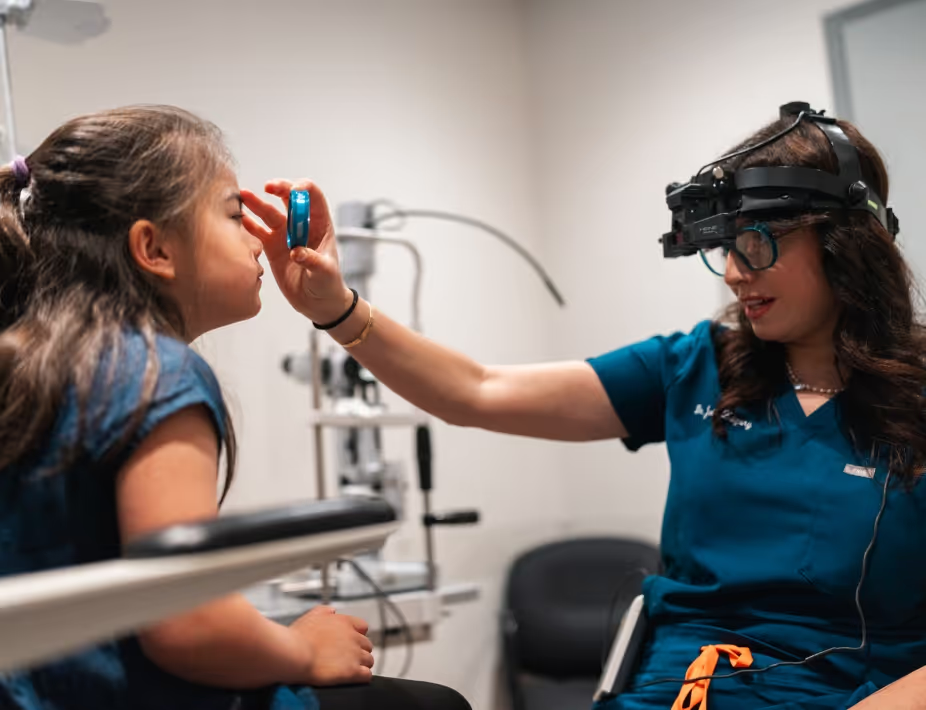
Many people develop screen-related symptoms because their prescription has changed. An eye exam can identify:
- Whether you need glasses or an updated prescription
- Underlying conditions contributing to your symptoms (dry eye, convergence issues)
- Vision problems specific to your screen habits
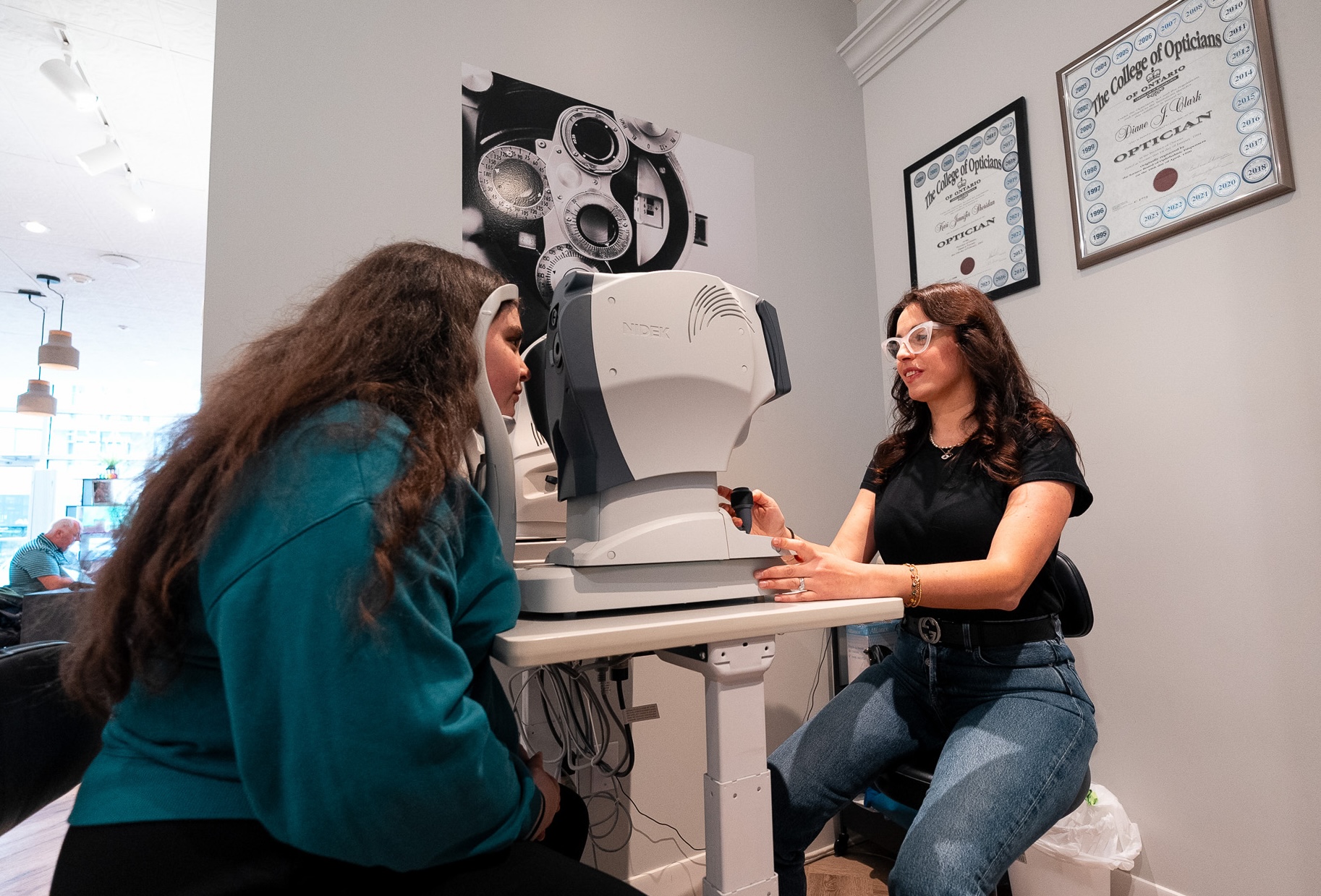
At Merivale Vision Care, we assess your visual needs specifically for your work setup, not just your general distance vision.
Should You Get Blue Light Glasses? (Decision Framework)
You Might Benefit If:
You use screens heavily in the evening and struggle to fall asleep
Blue light glasses worn 1-2 hours before bed may help you wind down. However, limiting screen time altogether works even better.
You're getting prescription glasses anyway
Adding a blue light filter coating is inexpensive and won't hurt. Just don't expect it to solve eye strain on its own.
You Probably Don't Need Them If:
You're hoping to prevent eye disease
Blue light glasses won't protect you from macular degeneration. Save your money.
You want to fix eye strain
Address the real causes first: blinking, ergonomics, prescription updates, and screen breaks. These will make a far bigger difference.
What to Look for If You Do Buy Blue Light Glasses
If you decide to try blue light glasses, here's what to know:
Stick to prescription options
If you wear glasses, talk to your optometrist about adding a blue light filter to your prescription lenses. Optical-grade lenses offer better and more consistent blue light protection than over-the-counter options. Plus, you'll get a proper eye exam to ensure your prescription is up to date—which often makes a bigger difference for screen comfort than the blue light filter itself.
Beware of marketing hype
Claims like "100% blue light protection" or "prevents blindness" are red flags. Reputable brands and eye care professionals are transparent about what blue light filters do and don't do.
Computer Vision Syndrome Care at Merivale Vision Care
At Merivale Vision Care, we take a comprehensive approach to digital eye strain.
When you come in with screen-related symptoms, we assess:
- Your current prescription – We check whether your glasses or contacts are optimized for your work distance
- Your eye health – We screen for dry eye, convergence issues, and other conditions that worsen with screen use
- Your screen ergonomics – We provide personalized recommendations for monitor setup
- Your symptoms and goals – We listen and create a plan for your specific situation
From there, we might recommend:
- A customized computer glasses prescription
- Dry eye treatment (if needed)
- Vision therapy exercises (for focusing issues)
- Ergonomic adjustments for your workspace
- Yes, sometimes blue light filtering—but as part of a broader strategy
Our goal is to help you work comfortably all day without sacrificing your eye health.
The Bottom Line
Blue light glasses can help some people with sleep and subjective comfort—but they're not a cure-all for digital eye strain, and they don't prevent eye disease.
The real culprits are reduced blinking, sustained near focus, poor ergonomics, and uncorrected vision problems. Addressing these will give you far better results.
If you're experiencing eye strain from screens:
- Try the 20-20-20 rule and conscious blinking (free, immediate relief)
- Optimize your workstation setup (big impact, low cost)
- Get a comprehensive eye exam to rule out prescription changes
- Consider blue light glasses as a supplement—not the primary solution
Ready to Find Real Relief from Screen-Related Eye Strain?
Book a comprehensive eye exam at Merivale Vision Care. We'll identify the actual causes of your discomfort—whether it's an outdated prescription, dry eye, or other factors—and create a plan that works for your screen habits.
If dry eyes are contributing to your discomfort, we also offer specialized dry eye assessments to get to the root of the problem.
Book your eye exam or dry eye assessment online or call (613) 226-8446.
Located at 1547 Merivale Road in Ottawa, we've been helping Ottawa residents see clearly and comfortably since 1987.
Medical Disclaimer
This article is for educational purposes only and does not replace individualized medical advice. Digital eye strain recommendations vary by patient. Blue light glasses are not FDA-regulated medical devices and do not treat or prevent eye disease. Please consult your optometrist for personalized care.
About Merivale Vision Care
Merivale Vision Care has been a leader in innovative vision care in the Ottawa community since 1987. Our team of passionate optometrists provides comprehensive eye exams, contact lens fittings, dry eye treatment, and personalized vision solutions. We combine advanced technology (Optomap imaging, OCT scans) with a patient-first approach.
Visit us at 1547 Merivale Road, Ottawa, ON K2G 4V3
Phone: (613) 226-8446
Book Online: merivalevisioncare.ca
Sources:
- American Academy of Ophthalmology: "Should You Be Worried About Blue Light?" (2023)
- Singh S, et al. "Blue light filtering spectacle lenses for visual performance, sleep, and macular health in adults." American Journal of Ophthalmology (2021)
- Canadian Association of Optometrists: "Digital Eye Strain" guidelines


.avif)